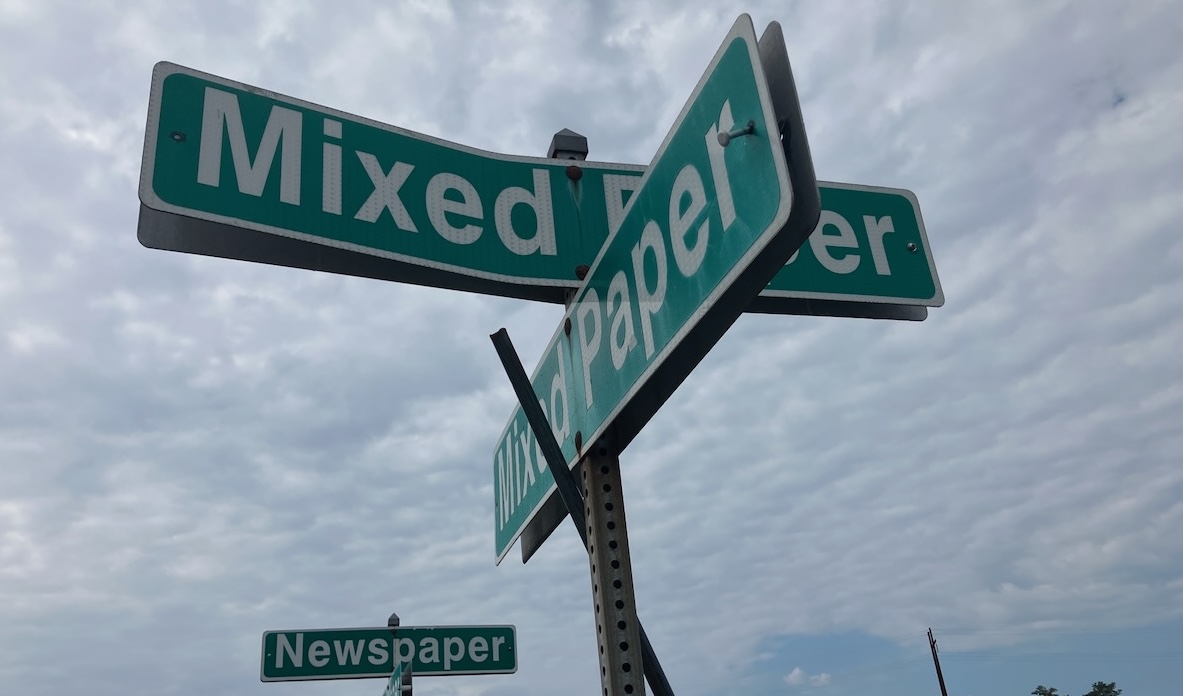
Mixed Paper Includes
- Catalogs & magazines (Swap shop also takes recent magazines)
- Cereal boxes
- Envelopes – even with plastic windows
- File folders
- Home & office paper, file folders, staples are ok
- Shredded paper is ok in our mixed paper!
- Junk Mail, glossy flyers, ad Inserts
- Paper egg cartons (Swap Shop also takes these)
- Phone books
Don’t include:
● Tissue paper due to low fiber quality
● Thermal paper such as receipts from most supermarkets
● Coated cartons such as milk, soup, and broth cartons.
Mixed Paper Recycling Facts
From the EPA:
- Paper and paperboard municipal solid waste was 67.4million tons in 2018, which was 23.1 percent of total solid waste.
- Approximately 46 million tons of paper and paperboard were recycled in 2018 for a recycling rate of 68.2 percent
- Nondurable goods made of paper, excluding newspapers, had a recycling rate of 43.1 percent.
- Newspapers had a recycling rate of 64.8 percent.
- Paper containers and packaging, excluding corrugated boxes, had a recycling rate of 20.8 percent.
- Corrugated boxes had a recycling rate of 96.5 percent in 2018.
What Happens to Mixed Paper in Eastham?
- Paper is baled and repurposed—e.g. into new paper products.
- Recycling one ton of paper saves about 17 trees and 7,000 gallons of water.
- Paper fibers can be reused 5–7 times before they wear out, so each cycle extends the life of a resource we’ve already harvested.
- Making recycled paper uses up to 64% less energy than making paper from virgin pulp.
- That translates into fewer greenhouse gas emissions.
How Much Mixed Paper Does Eastham Recycle?
In Massachusetts, all recyclable paper, cardboard, and paperboard products are banned from disposal by the Massachusetts Waste Bans.
Locally, Eastham residents are doing their part:
- 2024: 127.60 tons of mixed paper recycled
- 32.54 tons newspaper recycled
By recycling mixed paper, Eastham:
- Saves money; we pay less per ton for mixed paper than for solid waste
- Reduces pollution and greenhouse gases.
- Conserves natural resources.
- Keeps valuable material in circulation rather than turning it into smoke and ash.
More information
Check out these resources for more information.
- Eastham Recycling Committee