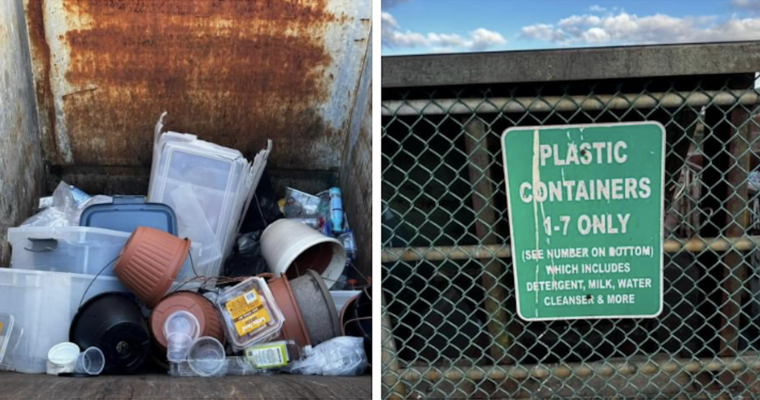
Plastics
What to know
- When plastic is thrown in the trash, Eastham pays to transport and dispose of the items at SEMASS.
- When the plastic item is recycled, a vendor picks up the plastic at the transfer station at no cost to the Town.
- Your well-rinsed #1 & #2 plastics dropped off at the Eastham Transfer Station Recycling container are almost always recycled!
- From the article “A Tale of Two Recycling Systems” in the Provincetown Independent on April 23, 2025:
The idea that plastic recycling is pointless is a myth, though, (Kari) Parcell said. Once you narrow a stream down to recyclable plastics, she said, about 80 percent of the material is reused. - In Eastham:
- 2024: 73.49 tons of plastic recycled
- 2025: 56.50 tons of plastic recycled
What do we recycle at the Eastham Transfer Station
- Clean Food Containers Labeled 1 thru 7
- The plastic code number can be found within the triangle on the item.
- All beverage bottles
- All bottles with necks
- Bathroom (shampoo, mouthwash)
- Containers – please rinse well
- Cups – No styrofoam, no colored, no compostable
- Household cleaner containers (dish detergent, glass and kitchen cleaners)
- Kitchen (Cooking oil, ketchup, mustard, syrup)
- Laundry (detergent, bleach, fabric softener)
- Milk, juice and water jugs (caps can be left on once they are cleaned)
- Plates
- Soap bottles
- Sherbet tubs
- Tub lids when on tubs!
- Yogurt containers – lids on is ok!
What NOT to recycle
- Plastic Bags: Plastic bags do NOT belong in the household recycling stream. They are the number one problem at recycling facilities because they wrap around sorting machinery, shutting down the sorting line often multiple times per day. Plastic bags, plastic wrap can be taken to the grocery store. See Plastic Wrap and Bags for more information.
- Dirty plastic. Wash first then recycle!
- Black plastic (including food service trays) should be placed in the trash because it is missed by optical sorters at recycling sorting facilities and will either end up in the trash or contaminating other materials.
- Rigid plastics such as laundry baskets, lawn chairs, toys, plastic bins).
- Plant pots & trays (plastic) are made from a variety of plastic resins and are often dark colors, so put them in the trash. White pots also go in the trash. There is such a wide variety of sizes and resin types with pots that they likely will NOT be recycled. Some garden stores will take the trays back. The pots may be welcome at the Swap Shop, depending on current inventory.
- Colored plastic cups. Clear ones can be recycled!
- Styrofoam. Styrofoam chunks or pellets) may reused by local shipping stores.
- Containers with hazardous contents (e.g. motor oil, brake fluid, etc)
- Lids to bottles unless they are on the bottles!
Eastham plastics bans
- Single use plastic bottles
- From CapeCod.com: Eastham Issues Plastic Bottle Ban Reminder
- Single-use plastic shopping bags
- Balloons
- Plastic Straws
- Polystyrene
- Single-use take out containers & plastic utensils must be 100% recyclable or compostable in a natural setting.
Town-by-town bans
Plastic facts
From Plastic pollution: facts & figures by Surfers Against Sewage (sas.org.uk):
- Over 1 in 3 fish caught for human consumption now contains plastic.
- Producing 1 ton of plastic generates 2.5 tons of CO₂.
- The world produces 400 million tons of plastic every year, a figure likely to triple by 2060.
- Only 9% of all plastic ever produced has been recycled.
- 11 million tons of plastic enter the ocean annually—equivalent to 2,000 garbage trucks dumped every day.
- By 2050, there could be more plastic than fish in the oceans.
- Plastic kills over 100,000 marine mammals and 1 million sea birds each year.
Plastic Free July
Plastic Free July is a global movement that encourages people to reduce single-use plastics through simple everyday choices. Eastham residents can participate by using reusable shopping bags, water bottles, coffee cups, and food containers, or by saying “no thanks” to items like plastic straws, utensils, and produce bags when they are not needed.
Plastic Free July isn’t about being perfect—it’s about making small changes that add up over time. Even swapping one habit for the month can help reduce waste and create lasting impact.
More information
Check out these resources for more information.
- Town of Eastham
- Other Links
- Eastham Recycling Committee Newsletters
- On this website