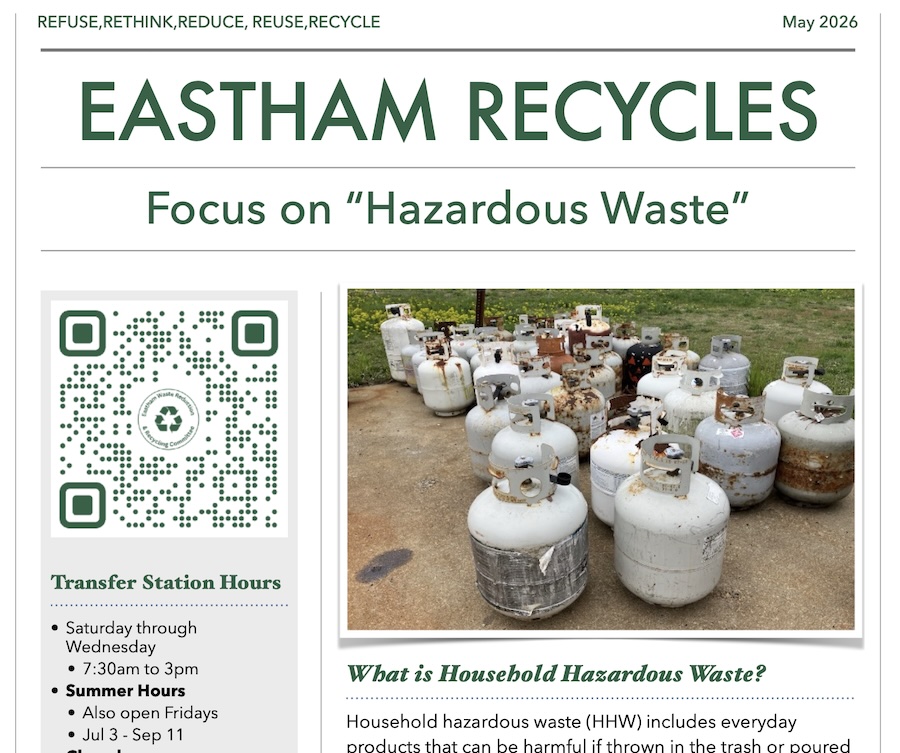
Reprint of the May 2026 edition of the Eastham Waste Reduction & Recycling Committee’s Newsletter.
Click here to download the PDF version
The focus of this month’s edition of the Eastham Waste Reduction & Recycling Committee’s Newsletter is Household Hazardous Waste!
This month, we’re focusing on household hazardous waste—those everyday products tucked under sinks, stored in garages, and forgotten on shelves that can pose real risks when thrown away improperly. Inside this issue, you’ll learn what counts as hazardous waste, why it matters for Cape Cod’s groundwater and public health, and how common items like batteries, paints, propane tanks, smoke detectors, and medications should be handled safely.
We’re also highlighting Eastham’s upcoming Household Hazardous Waste Collection Day on May 16, sharing tips on what belongs at the Transfer Station (and what doesn’t), and pointing you to helpful resources like Beyond the Bin for hard-to-dispose items. Plus, you’ll find Transfer Station hours, volunteer opportunities, upcoming events, and a quick plastics recycling quiz as we look ahead to June’s focus on plastics.
Join us in protecting Eastham’s environment by learning how small disposal decisions can make a big difference.
Topics include:
- What is Household Hazardous Waste?
- Why is Household Hazardous Waste a Big Deal?
- What Do I Do with My Household Hazardous Waste?
- What About Medical Waste?
- 2026 Recycling Survey
- In the News
- Upcoming Events
REFUSE, RETHINK, REDUCE, REUSE,RECYCLE
May 2026
EASTHAM RECYCLES
Focus on Household Hazardous Waste
Transfer Station Hours
- Saturday through Wednesday
- 7:30am to 3pm
- Summer Hours
- Also open Fridays
- Jul 3 – Sep 11
- Closed
- Memorial Day
- Juneteenth
Swap Shop
- Saturday, Sunday,
Wednesday- 10am to 1pm
Hazardous Waste Day
- May 16 9am to Noon
- Eastham Transfer Station
- www.loveyourlocalwater
.org
Subject to change.
HHW Collection
Accepted Items
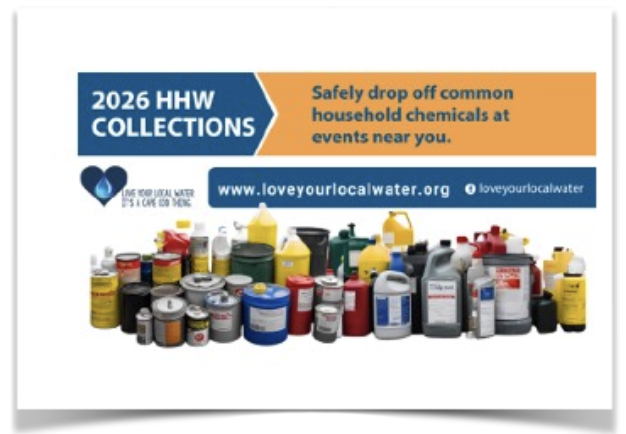
Oil-based paints, solvents, pesticides, gasoline, adhesives, and mercury-containing products.
See the full list at http://www.loveyourlocalwater.org/
Prohibited at the Transfer
Station
Explosives, Corrosive Materials, Pathological & Biological Waste (Animal Carcasses), Radioactive
Material, Ashes, Foundry Sand, Mining Waste, Sewage or Human Waste, Special Waste (Asbestos)
Helpful Links
June Focus: Household Hazardous Waste Pop Quiz
Q: Which of these belongs in the plastics recycling dumpster at the Transfer Station?
A. Plastic bottle
B. Garden hose
C. Plastic utensils
D. Styrofoam cup
Answer from last month’s quiz
Which of these items is NOT considered household hazardous waste?
C. Latex (water-based) paint
Volunteers Wanted
We are looking for new members as well as community volunteer to help strengthen our waste reduction efforts.
Lend a hand at local events, assist with a workshop, help plan future initiatives.
Whether you have an hour to spare or want to take on a small project, we’d love your help.
Reach out to recyclingcommittee@eastham-
ma.gov and get involved!
For More Information
Check out these resources for more information.
Contact Us
The Eastham Waste Reduction & Recycling Committee is always looking for volunteers as well as members. Contact us via email at recyclingcommittee@eastham-ma.gov or the Eastham Waste Reduction & Recycling Committee page on the Eastham Town website.
Archives
- April 2026: Trash
- March 2026: Food Composting
- December 2025: Textiles
- November 2025: Holidays
- October 2025: Swap Shop
- September 2025: Mixed Paper
- August 2025: Cardboard
- July 2025: Glass
- June 2025: Plastic
- May 2025: Plastic Bags
- April 2025: Metal
- March 2025: Compost
- December 2024: Holidays
- November 2024: Compost
- October 2024: Mixed Paper
- September 2024: Cardboard
- August 2024: Glass
- July 2024: Cans
- June 2024: Plastic
- May 2024: Plastic Bags
- April 2024: Compost
- March 2024: Trash
- February 2024: Clothes
- January 2024: Metal
What is Household Hazardous Waste?
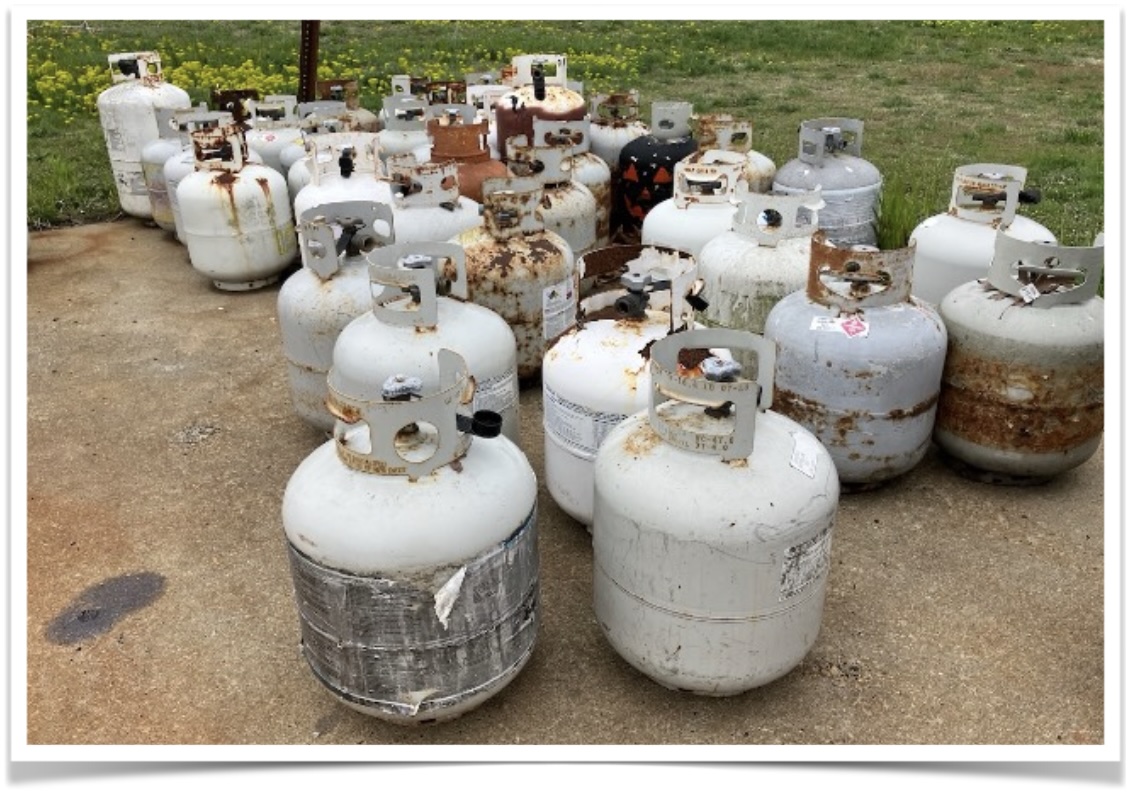
Household hazardous waste (HHW) includes everyday products that can be harmful if thrown in the trash or poured down the drain. Items like paints, cleaners, pesticides, motor oil, and batteries may be toxic, flammable, or corrosive—and require special handling. Improper disposal can pollute water, harm workers, and create safety risks.
A good rule of thumb: if the label says danger, warning, or caution, it doesn’t belong in your regular trash. While home medical waste isn’t classified as household hazardous waste (HHW), it still needs proper disposal. Sharps like needles should go in a designated container, and
medications should be taken to a drug take-back site—not thrown away or flushed. Other items like bandages can go in the trash if sealed. Proper handling helps protect workers, public health, and the environment.
Why Household Hazardous Waste Is a Big Deal?
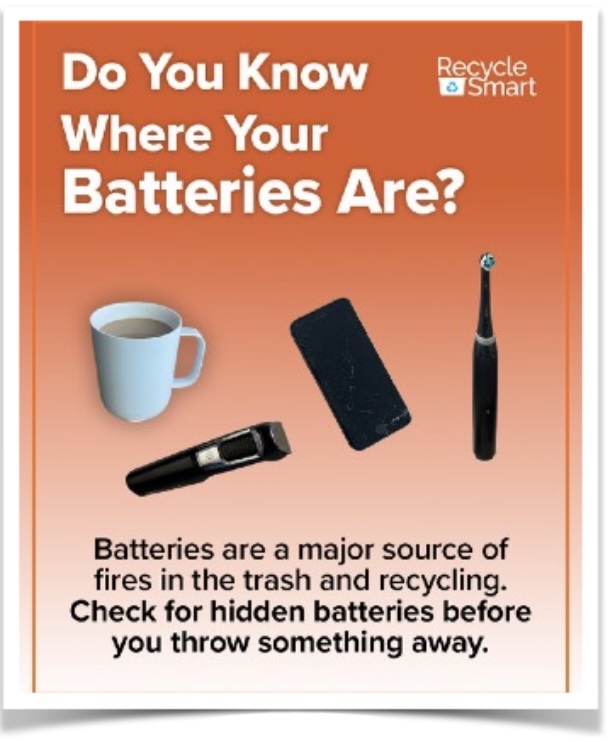
Household hazardous waste may seem harmless sitting under the sink or in the garage, but improper disposal can create serious environmental and safety risks. Products like batteries, paints, pesticides, pool chemicals, and cleaners can contaminate soil and groundwater, pollute the air when burned, and even cause fires in garbage trucks or waste facilities. On Cape Cod, protecting our water is especially important, since many homes rely on groundwater for drinking water.
What Do I Do With My Hazardous Waste?
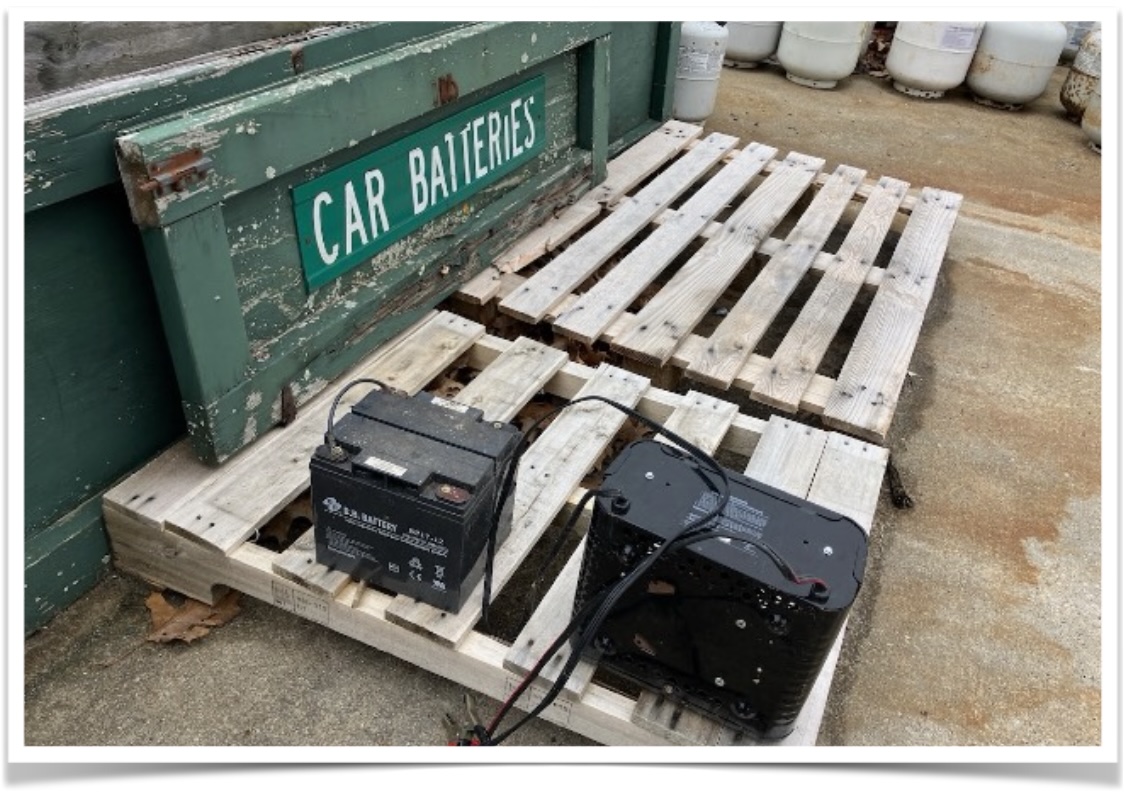
Some batteries—including small button batteries like CR2032s—should be brought to designated battery collection areas at the Transfer Station or participating retailers such as Staples. There is an area for car batteries at the transfer station.
Propane tanks should never go in the trash because they can explode if crushed or heated. The Eastham Transfer Station has a special area for these.
Smoke detectors may contain trace radioactive material and require special handling.
Oil-based paints and stain are considered hazardous waste and require special disposal at the HHW Collection Day. Latex paint is not accepted with hazardous waste collections. Instead, it should be dried out completely before disposal in the regular trash, or saved for a Latex Paint Take-Back Day.
Not sure where an item belongs? Resources like Beyond the Bin and the Cape Cod Commission Hazardous Waste Guide can help you find safe disposal options for hard-to-recycle and hazardous materials. A little extra care goes a long way toward protecting our community, workers, and environment.
What About Medical Waste?
Some household items can contain low levels of radioactive material, including materials from certain medical treatments for people or pets. If you or your pet are receiving radioactive treatments, ask your healthcare provider or veterinarian how to safely dispose of related waste.
Never flush medications down the sink or toilet—unused medications can harm waterways and wildlife. Instead, use a local medication take-back program or ask your pharmacy about safe disposal options.
2026 Recycling Survey
Help guide Eastham’s waste reduction, recycling, and reuse efforts.
The Eastham Waste Reduction & Recycling Committee is gathering community input to improve programs and set priorities for the year ahead.
Whether you use the Transfer Station often or not, your feedback matters. This quick survey takes just a few minutes and will help make Eastham’s programs more effective for everyone.
Thank you for sharing your thoughts!
Link to survey https://s.surveyplanet.com/5byu8qlu
In the News
Whether you have an hour to spare or want to take on a small project, we’d love your help. Reach out to recyclingcommittee@eastham-ma.gov and get involved!
- Read the ECAC’s Catch the Wave 4
- Watch the Eastham Dark Skies Presentation
- Mass. bottle deposit system continues nosedive, hitting new
low last year
Upcoming Events
- 2026–2027 Beach & Transfer Station Stickers
- Mail in Applications will start being processed April 1st
- Online Sticker sales will begin on May 1st
- Sticker Office Windows for in-person sales will open June 4th
- May 16 @ 9am-12pm : Hazardous Waste Day
- Eastham Transfer Station
- http://www.loveyourlocalwater.org/
- May 26 @ 5pm : Waste Reduction & Recycling Committee Meeting
- Eastham Town Hall
- The agenda is available on the town website.
- May 30 @ 10am-2pm : Eastham Community Tag Sale
- Windmill Green
- Bring a friend, shop local, and enjoy a fun community day!
- Jun 16 @ 5pm : Waste Reduction & Recycling Committee Meeting
- Eastham Town Hall
- The agenda is available on the town website.
- Jul 31 : Last day for Boat Shrink Wrap Collection
- Aug 1 @ 9am-1pm : Cape Cod Latex Paint Take-Back Day
- www.townofbourne.com/paint
- Tony Kent Arena, 8 South Gage’s Way, Dennis
- Sep 19 : Household Hazardous Waste Collection in Orleans